
Recently The English Apple Man attended a really enjoyable evening where Chris and Sheena Levett told the story of where and when apples arrived in Kent. Chris & Sheena have been friends for many years, as we both farmed in Hawkhurst, one on each side of the village.
The Venue: Ticehurst Village Hall. 'Ticehurst Talks' are held there raising funds for refurbishment of the venue, which has a notable history. Peter Reeves Chaired the event.
Peter farms in Ticehurst on the edge of the Bewl Bridge reservoir, his original farm and farmhouse is now well under the reservoir.
Ticehurst Talks
Thursday, June 11th 2026 - CHRIS and SHEENAGH LEVETT - The History of Apples
Is it CRUNCH TIME for the Kent apple industry?
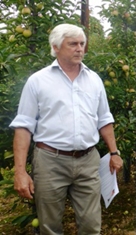 Apple growers Chris and Sheenagh presented a talk on the history of apple growing in Kent, and answer the question - "Why are so many apple orchards disappearing?"
Have you ever wondered why Kent became known as the Garden of England? What about the stories behind little known apple varieties such as 'Cow's Snout' or 'Lady Sudely' or even the the ancient practice of Wassailing?
The English apple industry has had its highs and lows for centuries and has had to adapt to huge changes. We shall follow the story from 4000BC to the present day, and peek into the future for the Kent apple into the 21st Century.
EAM Addition It seems that at some point, around 50 to 65 million years ago, the apple ancestor separated from its Rosaceae cousins on the evolutionary pathway. By duplicating almost all of its genome, apples now have very different fruit characteristics to related plants, such as peaches, raspberries, and strawberries.
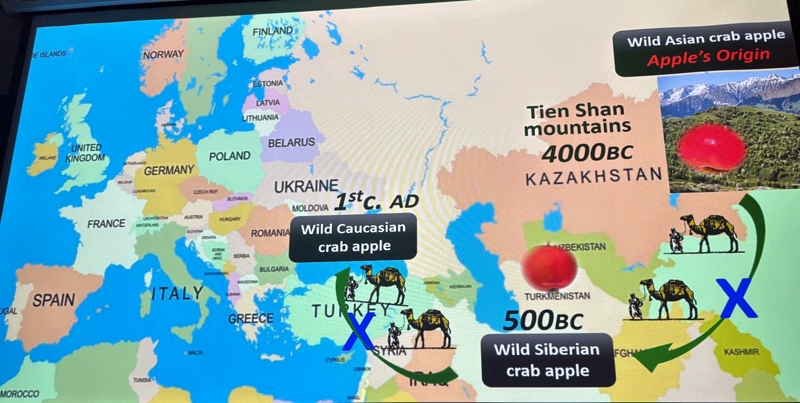
Below: The apple originated in the Tien Shan Mountains in Kasakhstan close to China 4,000 years ago. Over the centuries the apple made it's way Westwards via the 'silk road' the seeds spread by the hooves of camels and horses until it reached the the valley of the Tigris and Euphrates about 3,800 years ago where the discovery of budding and grafting onto a rootstock enabled propagation and multiplication of a distinct variety.
Chris Levett
Introduction - A bit about me!
"Seventh generation farmer, in my family"
"We grow around 100 acres of apples & cherries "
"Reducing our fruit acreage to concentrate our farm shop"
"Agronomist with Farm Advisory Services Team (FAST) for 10 years"
History of Apple growing in Kent
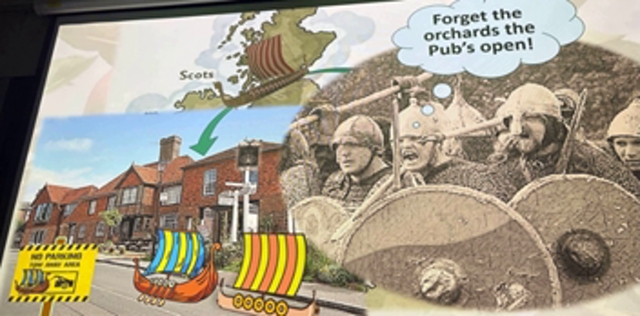
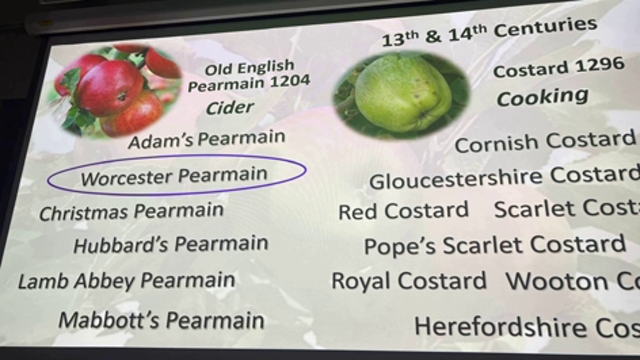
1. Origin; Romans, Vikings, and Cyder 1st - 15th Century
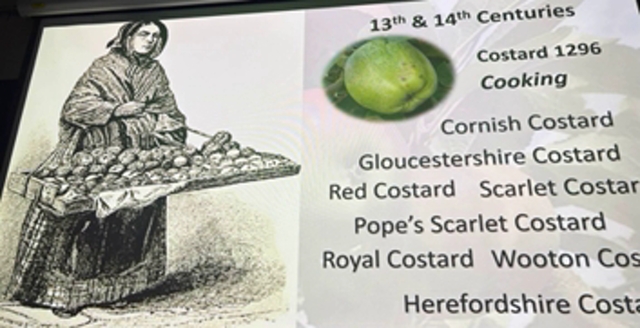
Below: The Costard and the origin of the "Costermonger"
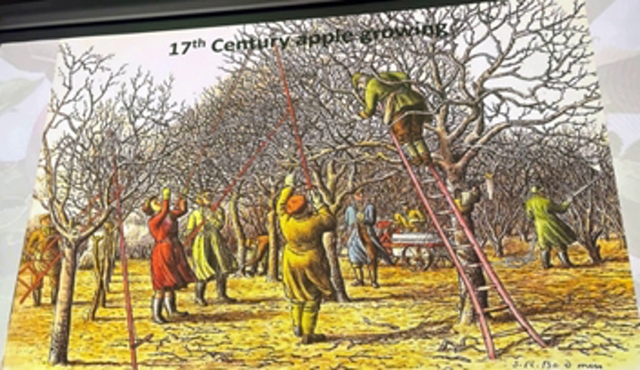
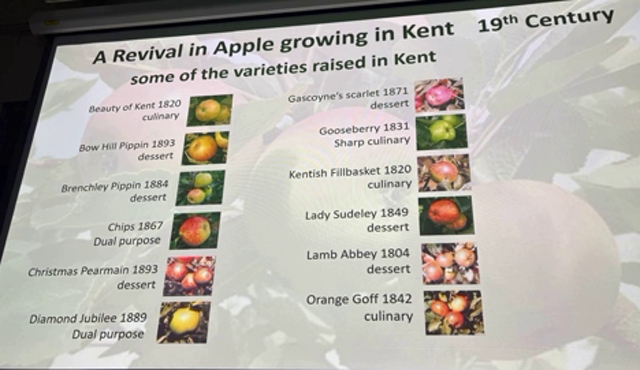
2. Henry V111 and the 'Garden of England' 16th - 19th Century
3. Kent orchards in the 20th and 21st Centuries
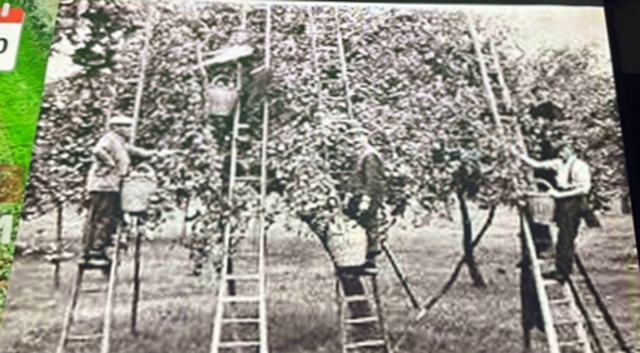
Below: Apple picking required long ladders for the Standard trees (25 to 30 feet high) in the 1800's and into the 1900's
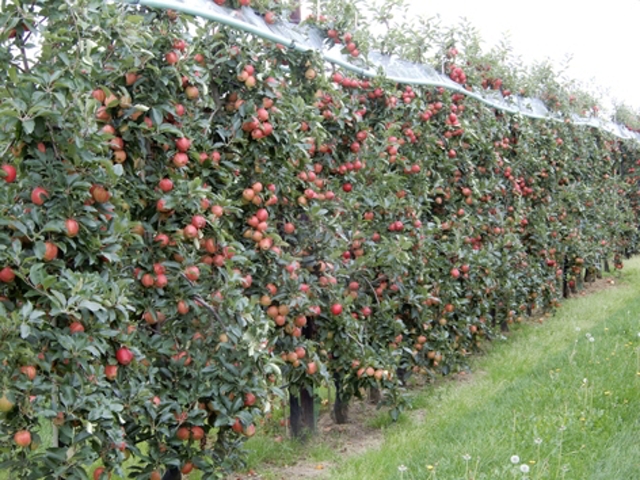
The tree format changed dramatically from the 1950' and vis centre leader trees (spindles) we now have hedgerow systems.
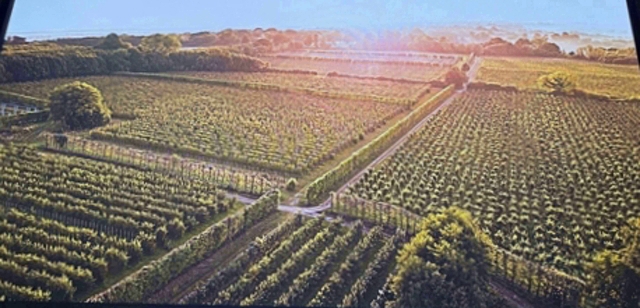
Below: Hedgerow system of today
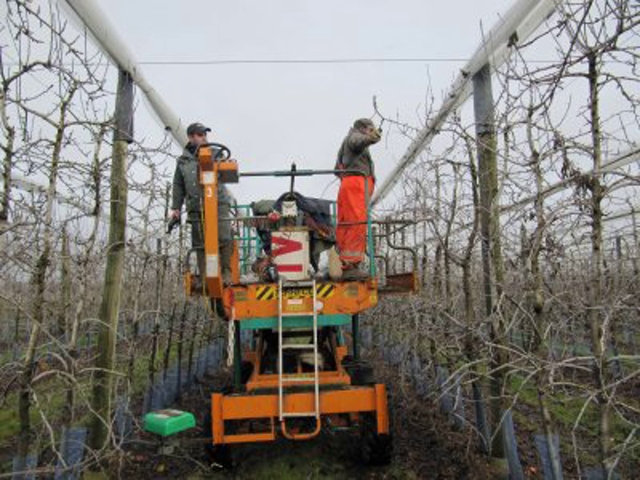
Below: Platform pruning with electric pruning equipment
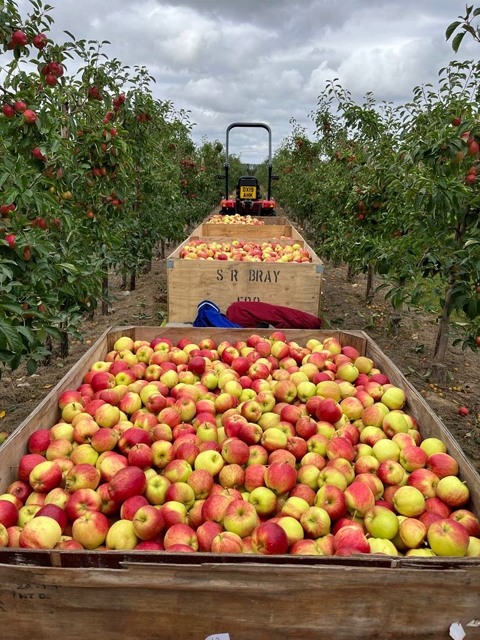
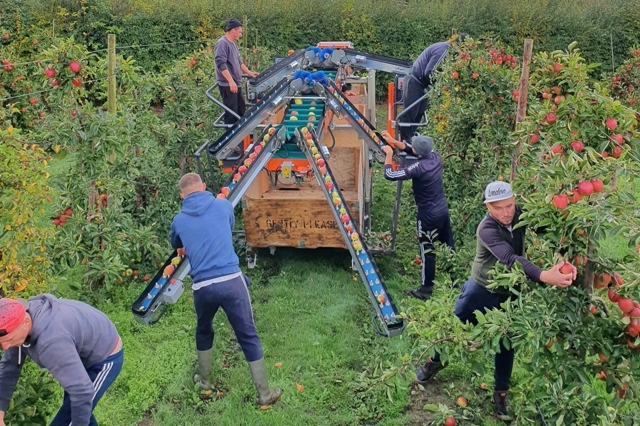
Below: Harvesting apples with 'Picking Trains' used by many growers today
Below: Apple harvesting machine, used by many large growers today
4. A peek into the future
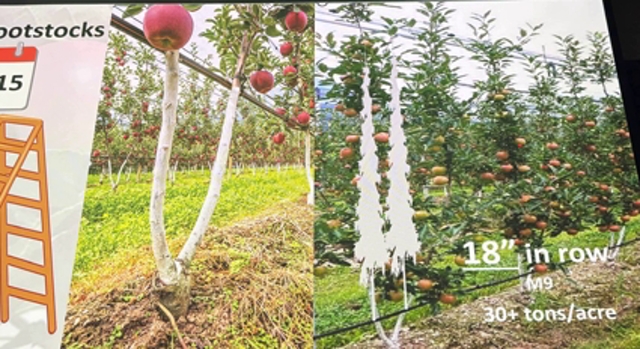
Below: Chris Levett's portrayal of Bibaum (twin leader producing tree stems 18 inches apart
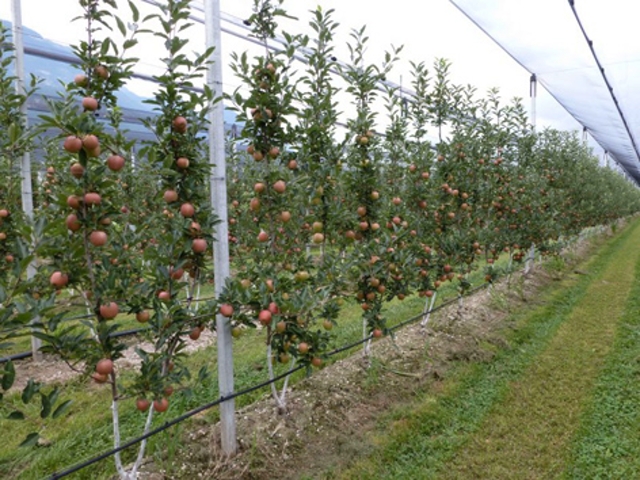
Below: Bibaum in the Italian Tyrol taken by the English Apple Man in 2012
The English Apple Man Comments
This excellent portrayal of apples and how they travelled over great distances and thousands of years; with the imaginative slides particularly eye catching, I have not fully recorded the rootstock story and its importance ( maybe in another Journal) and I have added one or two embellishments to the story. The Bibaum is particularly memorable because Sheena and Chris opened my eyes to this intensive system when I accompanied them (with FAST) to the Italian Tyrol where Bibaum was the star attraction
 That is all for this week
Take care
The English Apple Man